What we took home from Advanced Email Conference Amsterdam
Our talk on shipping campaigns with AI without losing control, the conversations at our booth, and the talks we liked in Amsterdam on 24 September 2026.


Nicki Pabst Rasmussen and Simon Westh Henriksen

On 24 September we were at the Advanced Email Conference in Amsterdam. Nicki and Simon gave a talk in the morning, and Nicki, Simon and Anette spent the rest of the day at our booth.
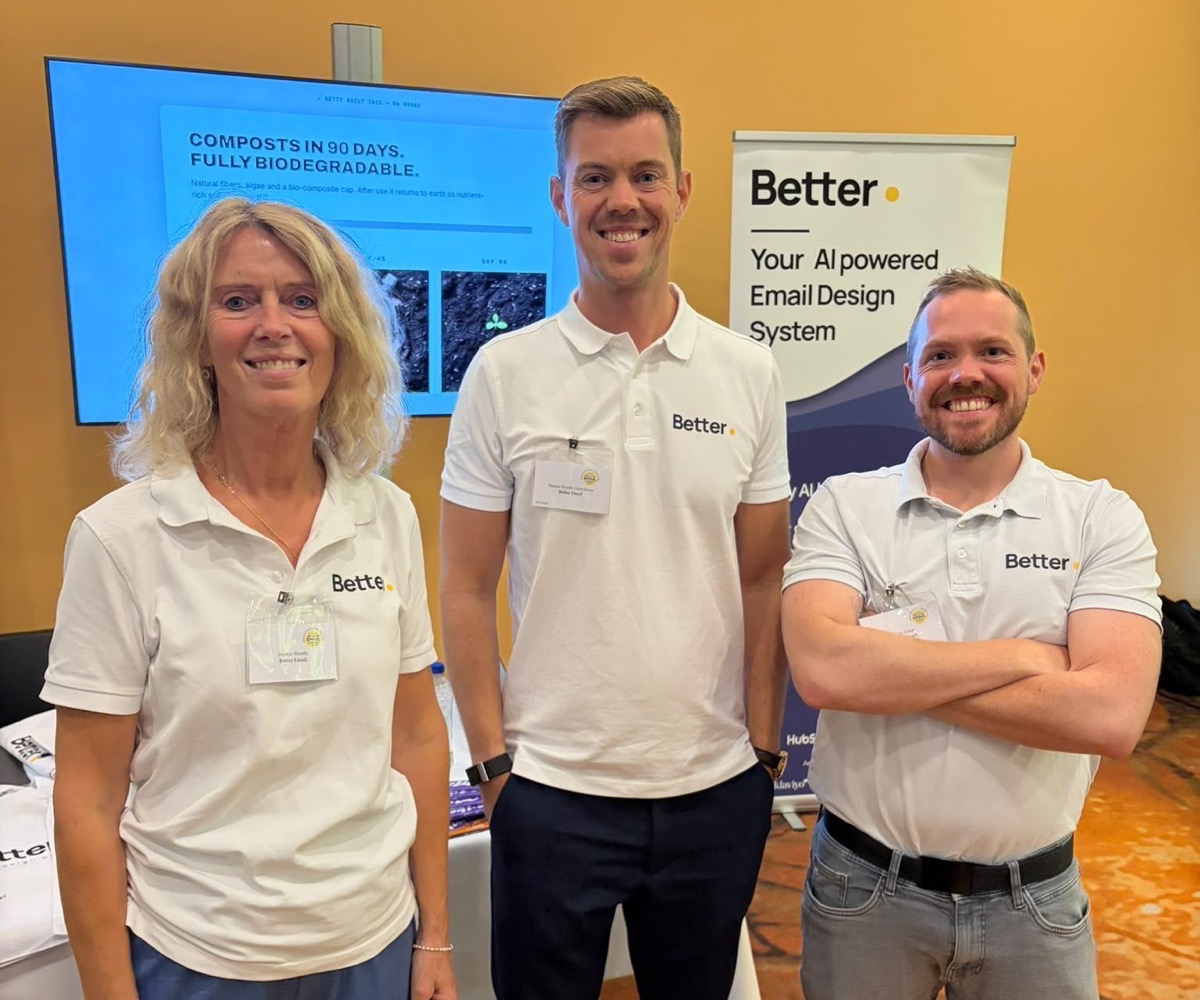
Thank you for stopping by
The booth was busy all day. Many people came over straight after our talk to see Better Email for themselves and ask questions. Thank you to everyone who stopped by, and for all the good conversations.
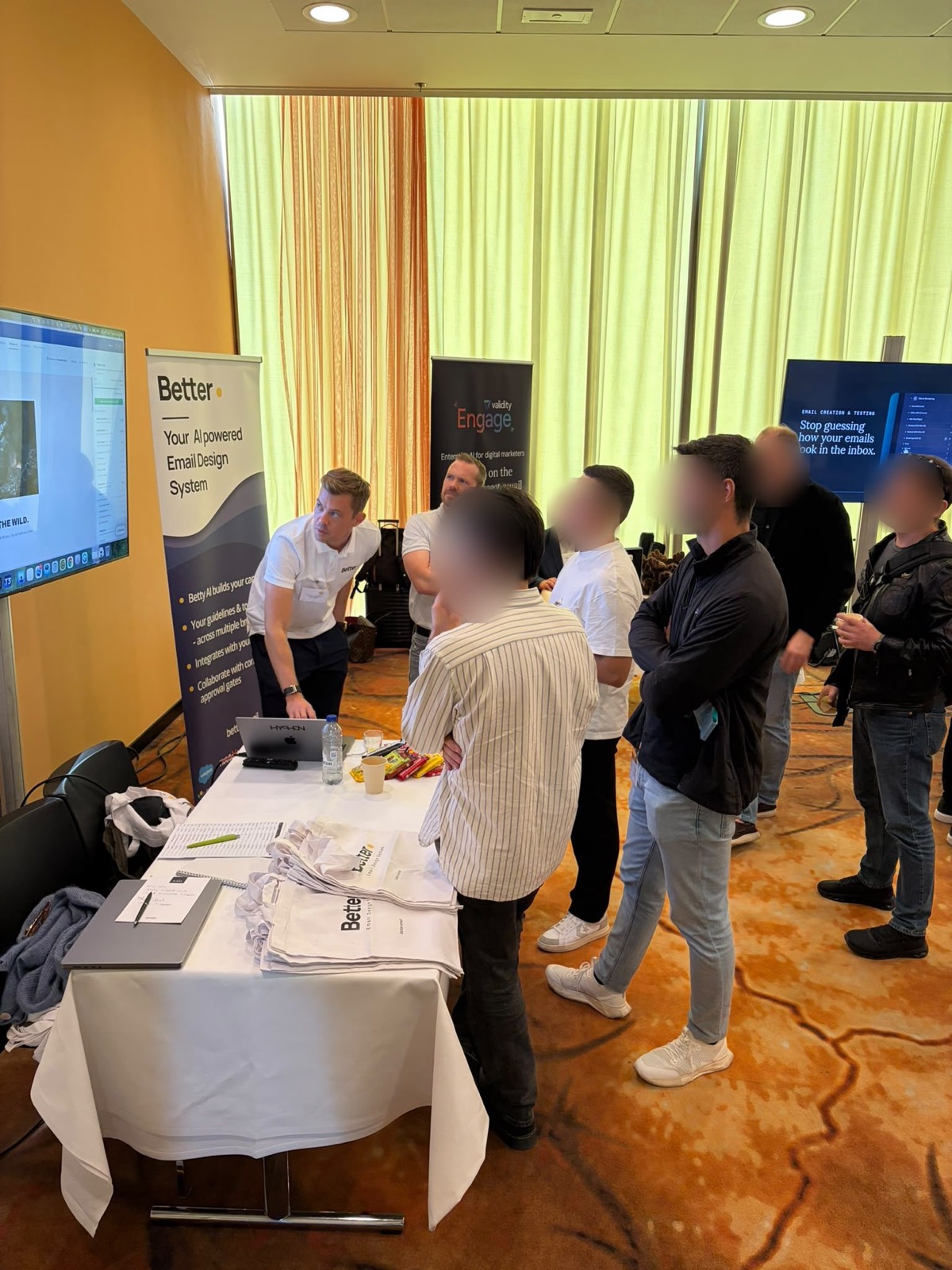
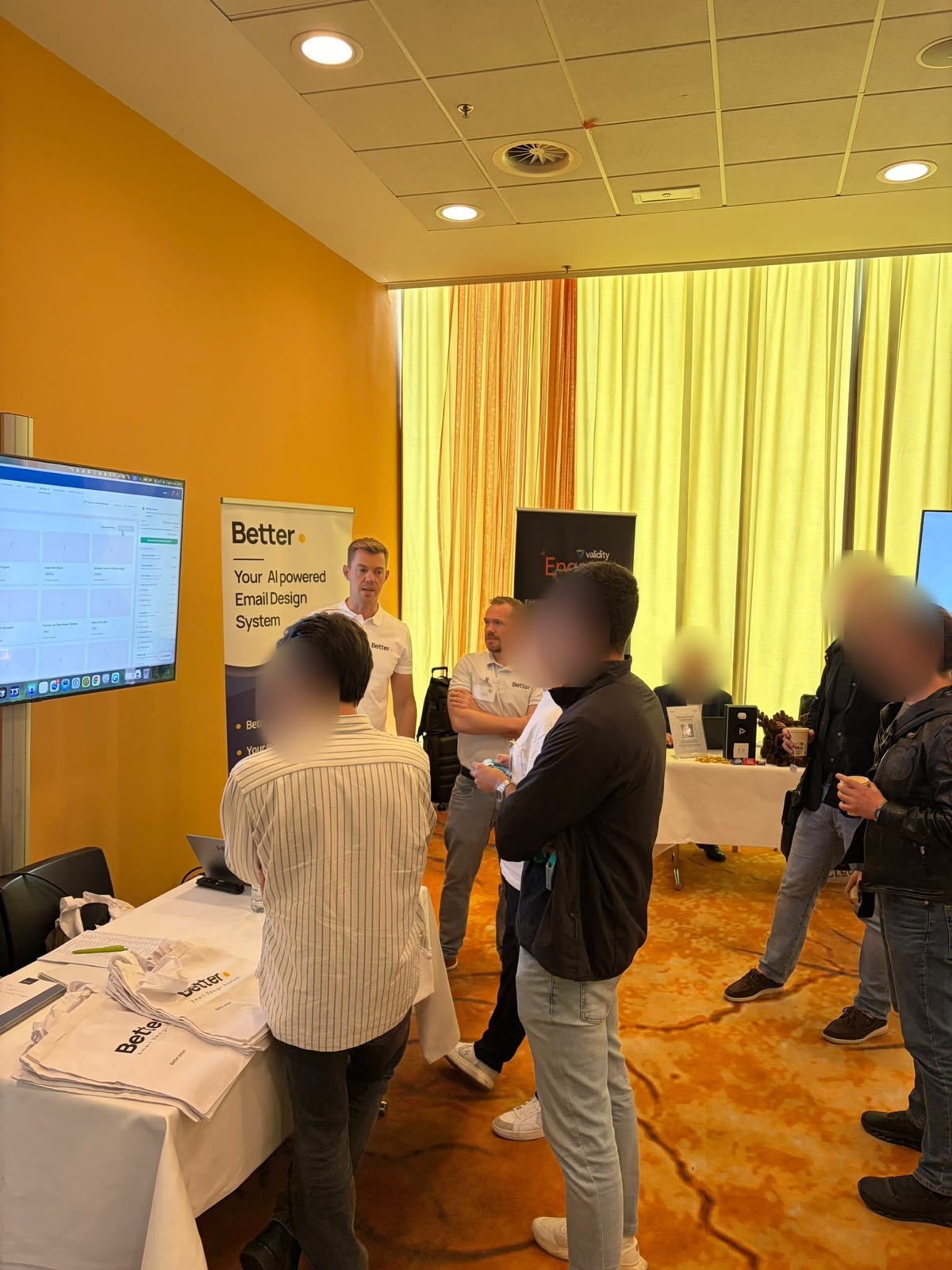
What people asked about
Most conversations came back to the same question: how do you use AI in campaign production and stay in control?
The teams we spoke to want to produce more campaigns without giving up brand and legal control to get there. They want the people on the team and the AI agents to work on the same campaign in one flow, instead of AI producing drafts that someone has to rebuild by hand.
Our talk: Stop talking about AI. Start shipping with it.
We first gave this talk at the Advanced Email Conference in London in June, and brought an extended version to Amsterdam. It is about what it takes to use AI in enterprise CRM and email production. In short:
Everyone has seen the AI demo. A prompt goes in and a campaign comes out. The demo skips the questions that decide whether a campaign can be sent: is it on brand, can legal approve it, does the personalisation still work, and does it render in Outlook?
AI on top of chaos is just faster chaos. Duplicate templates, old modules, brand rules kept in slide decks, legal copy reused from last time, and approvals spread over Slack and screenshots. Adding AI to that setup produces more of the same, faster.
A prompt knows language. It does not know how your organization ships. Generic AI optimises for what is plausible. CRM teams need what is valid: approved modules, market and legal requirements, approvals tied to a revision, and personalisation in the ESP's own syntax. As we put it on stage: "The difference is not a longer prompt. It is executable context."
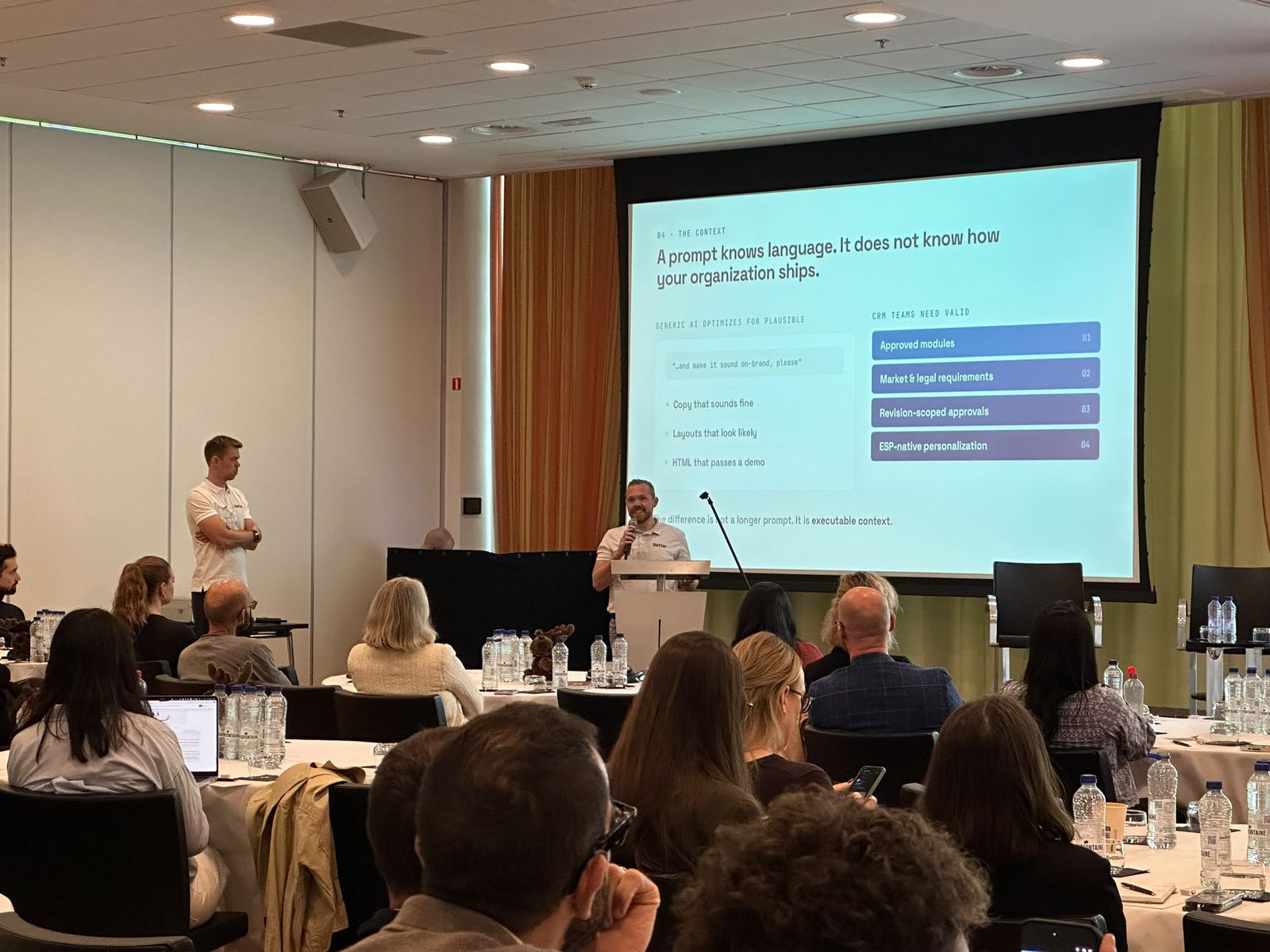
AI needs a harness the agent cannot bypass. That harness is made of approved modules, brand tokens, tone of voice and claim rules, localisation rules, the approval state, quality gates, and the ESP's syntax.
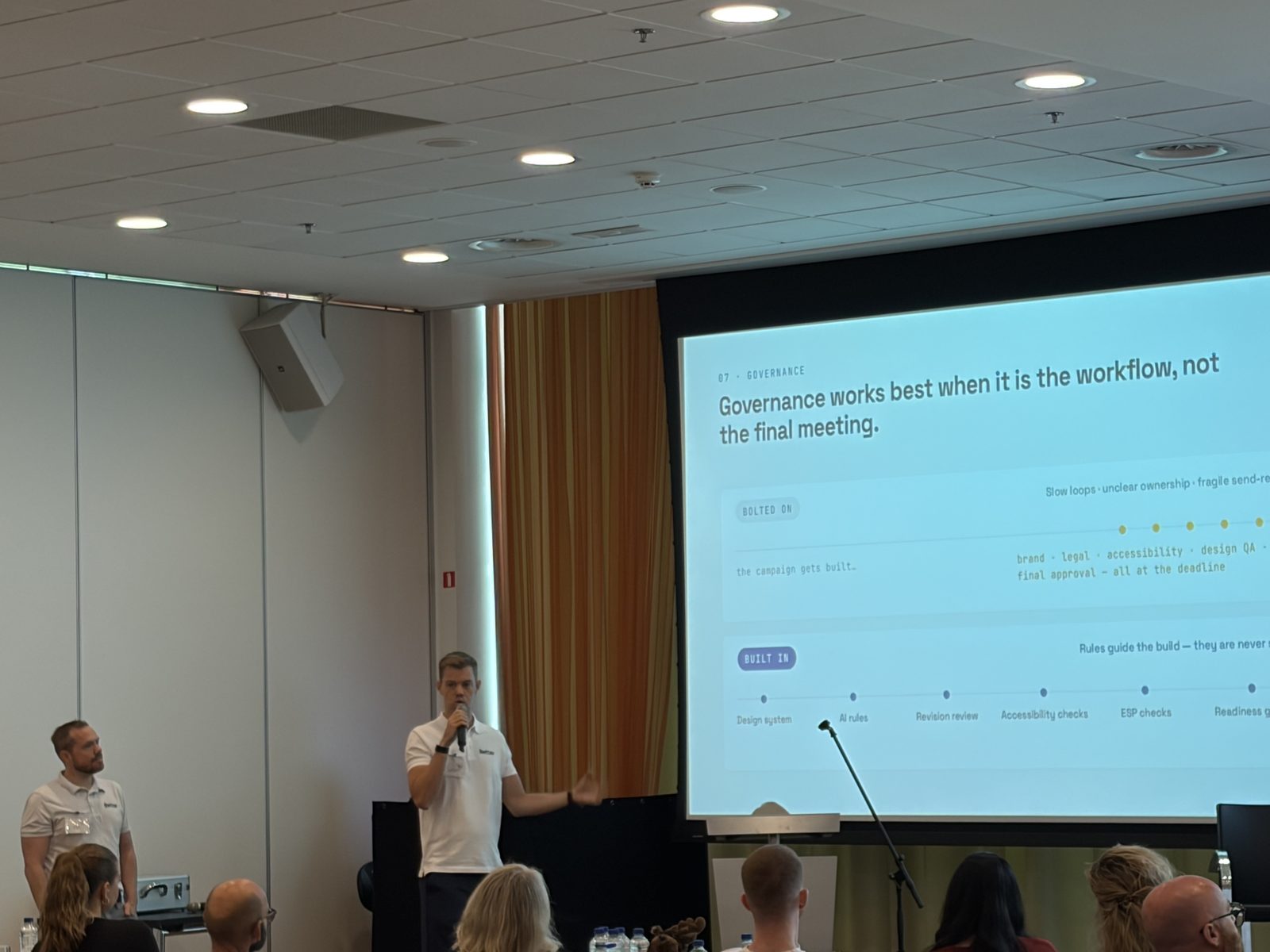
Governance works best when it is the workflow, not the final meeting. When brand, legal, accessibility and design checks all happen at the deadline, the result is slow loops and unclear ownership. When the rules are built into the design system, the AI rules and the review flow, they guide the build instead of surprising anyone at the end.
Quality checks should run before anyone has to apologise. Use fixed checks for what a machine can know, like links, alt text, merge tags and HTML size. Use AI review for what needs understanding, like tone of voice, claim risk and whether the image matches the copy.
You don't need a new ESP. The work before the ESP gets faster, and the sending stack stays where it is.
We ended with five questions to test whether a team is ready for AI in email production:
- Is AI locked to approved modules and brand guidelines?
- Can the AI work with personalisation, variants, languages and ESP-specific syntax?
- Are the right checks enforced before export?
- Can every stakeholder review and approve in one flow?
- Can you export to your existing ESP without rework?
"Five yeses, and you are ready to accelerate. A no means: build the harness first."
You can download the slides from London, or take the AI Readiness Test to score your own team on the same questions.
Talks we liked
Gabriele Gervasi, FlixBus. Gabriele showed the internal AI-powered tool FlixBus built for producing its campaigns. It matched what we hear from many large teams: AI only helps when it works inside the way the team already produces and approves campaigns.
Flavio Adriano Iervolino and Davide Macchi, WeRoad. What we noticed was how the CRM team's job is changing. Instead of writing each campaign, they build blocks that adapt to every market by themselves, and then put their effort into testing what works.
Matt Bierce, Freeletics. When AI writes more and more email, the emails start to sound the same, and personality is what makes a brand stand out. Matt also made the point that an email now has two readers: the person, and the AI in their inbox that summarises it for them. Good emails are written for both.
If you met us in Amsterdam and want to continue the conversation, or missed us there, see how Betty works inside your design system.


